Chapter 2 - Microorganisms: Friend and Foe Exercise 29
Solution 1
(a) Microscope
(b) Nitrogen
(c) Yeast
(d) Bacteria
Concept insight: Important from Exam Point of View.
(b) Nitrogen
(c) Yeast
(d) Bacteria
Concept insight: Important from Exam Point of View.
Solution 2
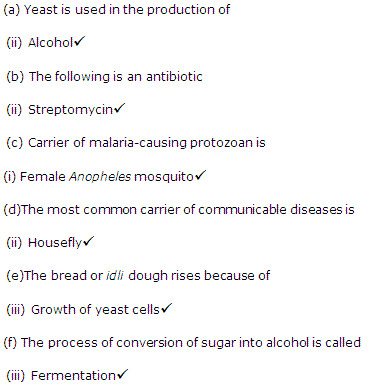
Concept insight: Important from Exam Point of View.
Solution 3

Concept insight: Recall the concept of harmful and useful microorganisms.
Solution 4
Micro-organisms are too small to be seen through naked eyes. They can be seen with the help of a magnifying glass or microscope.
For example, fungus that grows on bread is so small that it can be seen only with the help of a magnifying glass or microscope.
Concept insight: Microscope is the instrument which magnifies the given sample of microorganisms.
For example, fungus that grows on bread is so small that it can be seen only with the help of a magnifying glass or microscope.
Concept insight: Microscope is the instrument which magnifies the given sample of microorganisms.
Chapter 2 - Microorganisms: Friend and Foe Exercise 30
Solution 1
There are five major groups of micro-organisms:
(i) Bacteria - They are single celled disease-causing micro-organisms. They can be spiral or rod- shaped.
(ii) Fungi - They are mostly multicellular disease-causing microbes. Bread moulds are common examples of fungi.
(iii) Protozoa -They mainly include organisms such as Amoeba, Plasmodium,etc. They can be unicellular or multicellular.
(iv) Virus - Viruses are disease-causing microbes that reproduce only inside the host organism.
(v) Algae - They include multicellular, photosynthetic organisms such as Spirogyra, Chlamydomonas, etc.
Concept insight: List all the microorganisms and their role.
(i) Bacteria - They are single celled disease-causing micro-organisms. They can be spiral or rod- shaped.
(ii) Fungi - They are mostly multicellular disease-causing microbes. Bread moulds are common examples of fungi.
(iii) Protozoa -They mainly include organisms such as Amoeba, Plasmodium,etc. They can be unicellular or multicellular.
(iv) Virus - Viruses are disease-causing microbes that reproduce only inside the host organism.
(v) Algae - They include multicellular, photosynthetic organisms such as Spirogyra, Chlamydomonas, etc.
Concept insight: List all the microorganisms and their role.
Solution 2
Bacteria such as Rhizobium and certain blue-green algae present in the soil can fix atmospheric nitrogen and convert it into usable nitrogenous compounds. These nitrogenous compounds can be easily utilized by plants for the synthesis of plant proteins and other compounds.
Concept insight: Rhizobium and blue green algae have symbiotic association with plant roots.
Concept insight: Rhizobium and blue green algae have symbiotic association with plant roots.
Solution 3
Micro-organisms are too small to be seen through naked eyes. However, they are vital to plants and the environment.
Importance of micro-organisms:
i. They are used in winemaking, baking, pickling, and other food making processes.
ii. Alcoholic fermentation by yeast is widely used in the preparation of wine and bread. A bacterium Lactobacillus, promotes the formation of curd.
iii. Yeast reproduces rapidly and produces carbon dioxide during respiration. Bubbles of the gas fill the doughand increases its volume.
iv. Microbes are used to reduce pollution. For example, decomposers such as bacteria and fungi break down dead bodies and excreta to form inorganic compounds, which can be absorbed by plants.
v. They are used to increase the soil fertility by fixing the atmospheric nitrogen with the help of bacterium Rhizobium and some other blue-green algae.
vi. Microbes also play an important role in the preparation of medicines.
vii. Antibiotics are chemicals produced by micro-organisms to kill bacteria. Streptomycin, for example, is an antibiotic.
viii. Certain microbes are also used in the biological treatment of sewage and industrial effluents.
ix. Antibiotics are used to control many plant diseases.
x. Antibiotics are mixed with the feed of livestock and poultry to check microbial infection in animals.
Concept insight: List the important uses of microorganisms.
Importance of micro-organisms:
i. They are used in winemaking, baking, pickling, and other food making processes.
ii. Alcoholic fermentation by yeast is widely used in the preparation of wine and bread. A bacterium Lactobacillus, promotes the formation of curd.
iii. Yeast reproduces rapidly and produces carbon dioxide during respiration. Bubbles of the gas fill the doughand increases its volume.
iv. Microbes are used to reduce pollution. For example, decomposers such as bacteria and fungi break down dead bodies and excreta to form inorganic compounds, which can be absorbed by plants.
v. They are used to increase the soil fertility by fixing the atmospheric nitrogen with the help of bacterium Rhizobium and some other blue-green algae.
vi. Microbes also play an important role in the preparation of medicines.
vii. Antibiotics are chemicals produced by micro-organisms to kill bacteria. Streptomycin, for example, is an antibiotic.
viii. Certain microbes are also used in the biological treatment of sewage and industrial effluents.
ix. Antibiotics are used to control many plant diseases.
x. Antibiotics are mixed with the feed of livestock and poultry to check microbial infection in animals.
Concept insight: List the important uses of microorganisms.
Solution 4
Harmful effects of micro-organisms:
i. Micro-organisms cause diseases in animals. For example, in humans, bacteria cause diseases such as tuberculosis, cholera, typhoid, etc.
ii. In cattle, the foot and mouth disease is caused by a virus.
iii. Also, several microbes cause diseases in plants. For example, the productivity of wheat, orange, apple, etc. is reduced due to microbial diseases in plants.
iv. Certain microbes, on entering into our body, produce toxic substances. This leads to food poisoning. Some micro-organisms such as fungus spoil our food. For example, bread when left unused under moist conditions gets spoilt by fungus, producing a white cotton-like growth on the bread.
Concept insight: Recall the harmful effects of microorganisms.
i. Micro-organisms cause diseases in animals. For example, in humans, bacteria cause diseases such as tuberculosis, cholera, typhoid, etc.
ii. In cattle, the foot and mouth disease is caused by a virus.
iii. Also, several microbes cause diseases in plants. For example, the productivity of wheat, orange, apple, etc. is reduced due to microbial diseases in plants.
iv. Certain microbes, on entering into our body, produce toxic substances. This leads to food poisoning. Some micro-organisms such as fungus spoil our food. For example, bread when left unused under moist conditions gets spoilt by fungus, producing a white cotton-like growth on the bread.
Concept insight: Recall the harmful effects of microorganisms.
Solution 5
Antibiotics are medicines produced by certain micro-organisms to kill other disease-causing micro-organisms. These medicines are commonly obtained from bacteria and fungi. Streptomycin, tetracycline, penicillin, etc. are common antibiotics.
Precautions to be taken while using antibiotics:
(i) Antibiotics should be taken under the supervision of a well qualified doctor.
(ii) Course (intake) of antibiotics should be completed as per the prescription given by the doctor.
(iii) Antibiotics should be taken in the right amount and at the right time. A wrong dose of antibiotic makes the drug ineffective. Also, excessive consumption of drugs may kill the useful bacteria present in our body.
Concept insight: Antibiotics are very effective against bacteria.
Precautions to be taken while using antibiotics:
(i) Antibiotics should be taken under the supervision of a well qualified doctor.
(ii) Course (intake) of antibiotics should be completed as per the prescription given by the doctor.
(iii) Antibiotics should be taken in the right amount and at the right time. A wrong dose of antibiotic makes the drug ineffective. Also, excessive consumption of drugs may kill the useful bacteria present in our body.
Concept insight: Antibiotics are very effective against bacteria.
Comments
Post a Comment